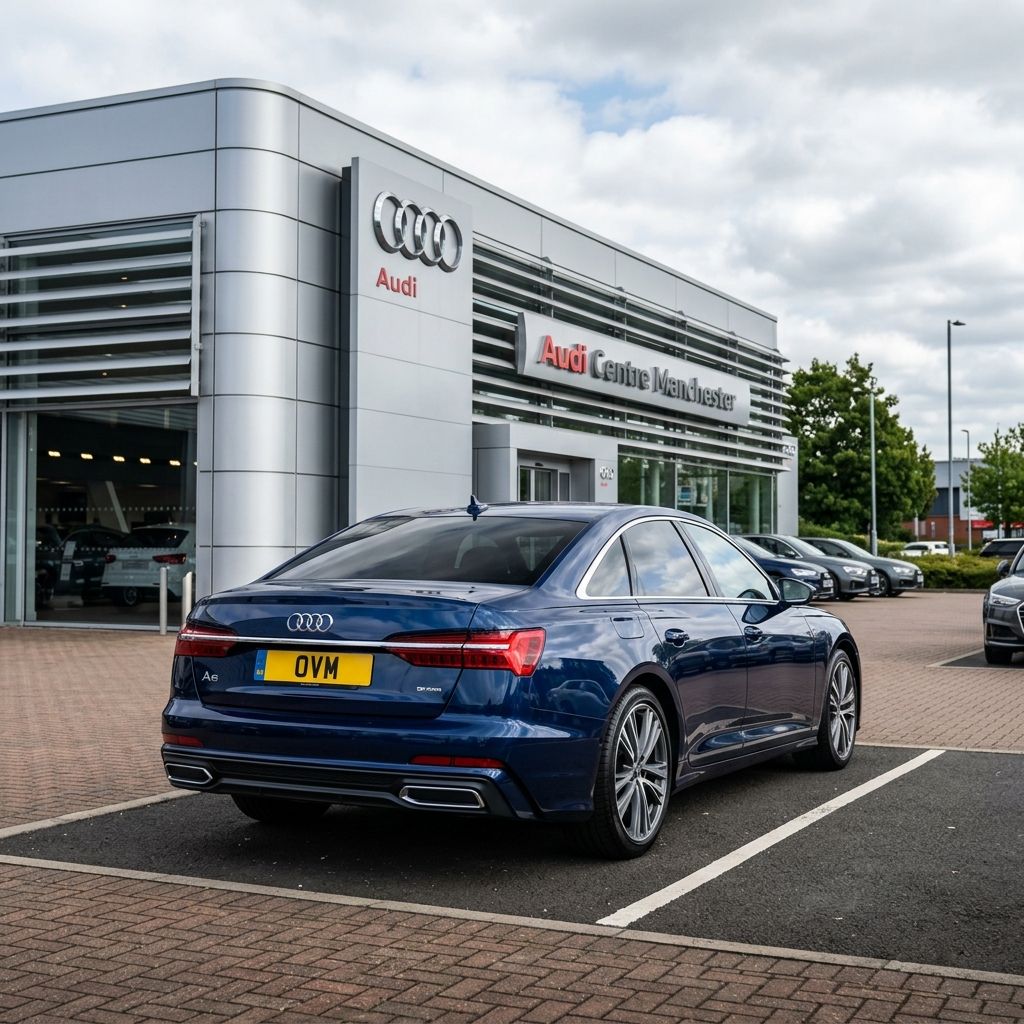
Driven means the vehicle is the transport
Driven means the car or van is the transport. A driver collects it and drives it to the next address. Loaded means a truck is the transport. The car is cargo. Someone has to fill a deck, lash the vehicle, run a planned route and often add a depot leg at one or both ends.
In practice the driver arrives at the collection address, records the condition, starts the engine and drives to the delivery address. The route is that job. There is no consolidation point. There is no second handling team.
That is why a single unit can leave once the paperwork is clear, instead of sitting until a truck is economic. It is also why the vehicle has to be legal to drive. Trade plates do not invent an MOT. They do not make a non-runner into a runner. They let a trade driver move a vehicle that is already fit for the road.
If you are trying to choose the product at all, use when trade plate delivery is the right move. The long side-by-side with a loaded truck stays on when a trade plate driver beats a transporter. This page explains the job we actually run.
What has to be true before a driver is sent
A driver is only sent when the car or van has a valid MOT, is drivable and is legal for the public highway. It needs enough fuel or charge to reach the first filling or charging point. If any of that is missing, we will not pretend a set of plates will fix it.
Light commercial vans are in scope if they are legal to drive. Trucks and HGVs are not. Salvage is not. Category write-offs that cannot legally be driven are not.
We quote from the registration and both postcodes. Named contacts at both ends matter more than people think. A driver at a locked compound with nobody answering the phone is not a movement. It is a wasted shift.
Auction collections add one more gate. Release has to be confirmed with the site before dispatch. That has its own page, auction collection after release, because the risk there is storage charges, not what driven means.
What the driver actually does
The driver collects one roadworthy car or van on trade plates, records the condition and drives it to the delivery address. They work a job we have booked in our own software. They are not picking work off a marketplace. They arrive with trade plates, take the keys under instruction and make the condition record before the wheels turn.
Photographs of the panels. Mileage reading. Notes against that registration. Then the drive. Then the handover, with keys, a signature and the same kind of record at the far end.
You get digital proof of collection and delivery when the vehicle is handed over. The door to door paperwork walk-through lives on vehicle collection and delivery with POC and POD. That record is possible because one person has the vehicle from end to end.
Road risk cover applies while the vehicle is driven on our plates. We do not add extra policy names here.
Why not loaded is the point, not a slogan
Not loaded means one roadworthy car or van leaves without waiting for a truck to fill a deck. A transporter is the right tool for volume on one route and for anything that cannot legally be driven. We will say so. Dealers still type vehicle movements when they mean a driver. They still type it when they mean a low-loader. Mixing those two on one URL is how you get a driver sent to a car that will not start.
The test is driven, not loaded. One roadworthy unit can leave without waiting for a deck, and so can a handful booked as separate driven jobs. A car going to a customer's door is a handover, not a kerbside unload from a trailer. A car with no MOT is not this product, even if someone is willing to pay.
Dealer work that is really a site transfer or a retail handover is described on site transfers and retail handovers. How we cover the whole country, rather than a list of towns, is on how OVM covers the UK from Glasgow.
What a quote is pricing
A quote prices that one driven job from the registration and both postcodes. There is no public rate card on this page. We will not invent one. Two jobs over the same miles are not the same job. A dealer-to-dealer leave-with-the-keys movement is not a retail handover with a walkaround. An auction gate with a release code is not an unmanned lock-up.
Fuel is charged separately. The movement price covers the driven job. The date you need it, the vehicle, the distance and what has to happen at each end all change the figure. Send the registration and both postcodes. The Instant Quote shows the price on screen.
Instant quote on this page, or call 0141 459 1302. The office is in Glasgow. Email [email protected].
What vehicle movement services means here
Vehicle movement services on this site means a driver collecting a roadworthy car or van on trade plates and driving it to the next site. The vehicle is the transport. It is not a truck, not a low-loader, not a recovery. If the unit has a valid MOT and can be driven, this is the job. If it cannot leave under its own power, it is not.
Single vehicle movements
Most of the work is one unit. One registration, one collection postcode, one delivery postcode, one driver. Dealers book that when a car or van has to leave today and waiting for a loaded run would cost more in compound rent than the driven mile. You do not need a full transporter just because the job is one car.
Commercial vehicle movements
Commercial here means vans a driver can legally take on trade plates. Panel vans, car-derived vans, the stock a dealer actually sells. Not HGV. Not a rigid. Not a recovery. If it needs a truck, that is a different firm. If it is a van with a current MOT, quote it.
Nationwide vehicle movements
Coverage is nationwide. Collection can be in one region and delivery in another. It is the same product. The Glasgow office books it, with in-house drivers rather than a marketplace. Get an instant postcode quote on this page or call 0141 459 1302.
Trade plate vehicle movements versus a transporter
Use trade plates when the car or van is legal to drive. Use a transporter when it is the cargo. The full comparison is when a trade plate driver beats a transporter. The cost of the driven job is on what trade plate delivery costs. The product page is trade plate vehicle delivery. Timings are on how long trade plate delivery takes. To book, use the quote form on this page.
One car versus a van
A car and a van both move on trade plates. A van can need a different route because of height and weight.
A car takes most roads a dealer already uses. A van can be taller, heavier, slower to fuel. Height barriers and tight yards belong on the quote. We ask. We do not treat a high-roof as a large car and hope.
Light commercials that are legal to drive are in. Rigids are out. If you are not sure, send the registration. The office will say.
Valid MOT or the job stops
Trade plates do not replace a test. No valid MOT, no driven movement. The same rule applies to a short hop and a nationwide run.
Auction stock is the usual trap. The listing said it drove. The MOT is out. We will not send a driver to fail at the gate. A transporter is the tool then.
Waiting for a load, or sending a driver
A transporter waits until the deck pays. A driver does not. One roadworthy unit can leave once the paperwork is sorted.
If the unit is sitting on an auction yard, that wait is auction collection after release. Storage runs until it leaves. The job starts at release, not at the hammer. When to buy plates at all is trade plate vehicle delivery.
How long a vehicle movement takes
There is no honest number on this page that fits every job. Distance, release, both ends being ready and whether it is a site swap or a customer walkaround all change it.
Same-day is a quote for that date, not a default because you filled the form this morning. The Instant Quote shows the price on screen. How the clock actually works is on how long trade plate delivery takes.
What insurance sits on the movement
Motor trade road risk applies while it is driven on our plates. We do not name extra policies here.
Cover does not make an illegal car legal. It does not turn salvage into a plates job. The longer explainer is is trade plate delivery insured.